Storm and Flash Flood Cleanup in Englewood, CO
A summer cloudburst can drop an inch of rain in minutes, fill window wells and push water under doors into lower levels. The restoration team pumps it out, removes what the floodwater touched and dries the structure.
(888) 532-8620Storm water coming in? Call now- Window well flooding
- Category 3 protocol
- Mud and silt removal
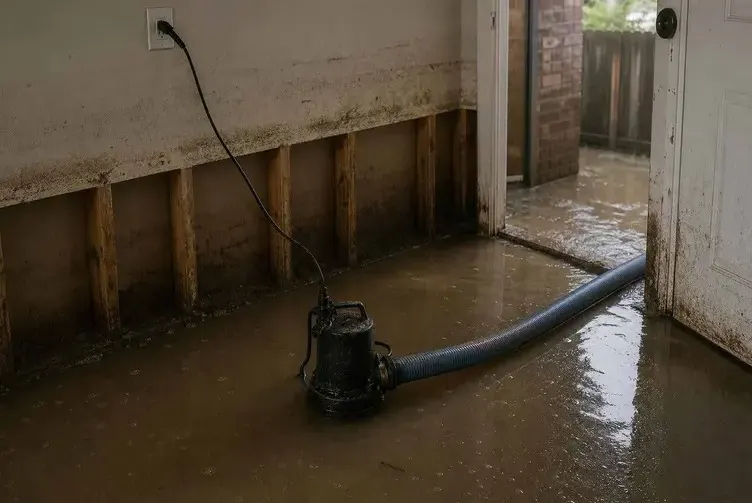
What to do when storm water gets inside
- Stay out of moving or deep water and away from any outlet or panel near it.
- Do not drive or walk through flooded streets or underpasses.
- Once the rain stops, photograph the water line, the window wells and every wet room.
- Keep children and pets away from floodwater and mud.
- Call the restoration team for pump-out and cleanup.
How storm and flash flood cleanup is handled right
Mud comes out first
Silt and mud are shoveled and extracted before drying, because they hold water and contamination.
Remove above the line
Drywall, insulation and carpet the floodwater touched are cut out above the high-water mark.
Treat, then dry
Surfaces are cleaned and treated with an EPA-registered antimicrobial, then dried with air movers and LGR dehumidifiers.
What does storm and flash flood cleanup cost in Englewood, CO?
In Englewood, CO, storm and flash flood cleanup typically runs $2,500 to $15,000. A window well leak into an unfinished basement is at the low end; a finished lower level with mud and several inches of water is at the high end.
For a closer planning number, run the water damage cost calculator. The restoration contractor who responds sets the real scope after the walkthrough and the moisture map.
How storm and flash flood cleanup is handled in Englewood
- 01
Pump and muck out
The response team pumps out standing water and removes mud and silt.
- 02
Cut out and bag
Porous materials the floodwater touched are removed above the high-water line.
- 03
Clean and treat
Hard surfaces are cleaned and treated with an EPA-registered antimicrobial.
- 04
Dry and verify
Air movers and LGR dehumidifiers dry the structure, with readings logged to the goal.
How storm water reaches Englewood homes
Englewood sits where Little Dry Creek runs west through the city to the South Platte River, and the June 1965 South Platte flood is still the benchmark for how bad high water can get along the river corridor. Most storm losses today are smaller and faster: a summer cloudburst drops more rain than yards and storm drains can take in a few minutes. The water finds the lowest way in:
- Window wells that fill and push water through basement windows
- Doors and walkouts at or below the grade of the yard
- Floor drains that back up when the storm system surcharges
- Downspouts that dump next to the foundation
- Low spots near Little Dry Creek and the Platte corridor
Why floodwater is handled differently
Water from outside is Category 3 from the start. The restoration team works in protective gear, removes mud, and cuts out drywall, insulation and carpet above the high-water mark. Hard surfaces are cleaned and treated with an EPA-registered antimicrobial before any drying begins. The drying itself follows the same IICRC S500 goal as any structural drying job.
Flood coverage is separate
Standard homeowners policies usually exclude surface flooding. Flood insurance is its own policy, often through the National Flood Insurance Program. FloodSmart.gov explains flood coverage, the National Weather Service flood safety page covers staying safe in a flash flood, and the City of Englewood posts local storm and floodplain information. When a storm also damaged the roof, see hail roof leaks.
Other water damage services in Englewood
Water damage help across Englewood, CO
The Englewood restoration crew covers every Englewood neighborhood from Downtown and South Broadway to Arapahoe Acres and Kent Place, plus Sheridan, Cherry Hills Village, Greenwood Village and Centennial next door.
ZIP codes 80110, 80111, 80112, 80113, 80150, 80151 and 80155.
See every Englewood area coveredStorm and flash flood cleanup questions
Why did water come in through the window well?
Window wells collect rain from the yard and the roof. When the drain at the bottom clogs or the storm is too heavy, the well fills and water pushes past the window frame.
Is storm water considered sewage?
Floodwater from outside is treated as Category 3, the same class as sewage, because it picks up contaminants on the way in. Porous materials it touched are removed.
Does homeowners insurance cover flash flooding?
Surface flooding is usually excluded from homeowners policies and covered only by flood insurance. Water through a roof damaged by the storm is often treated differently. Coverage depends on your policy, so it is worth checking with your own insurer.
How long does flood cleanup take?
Removal and cleaning usually take one to three days, and drying usually adds three to five days, depending on how much of the structure got wet.
How can I keep window wells from flooding?
Clear covers, a clean drain at the bottom of each well and downspouts that discharge well away from the foundation prevent most window well floods.
Is Englewood in a floodplain?
Parts of the city along Little Dry Creek and the South Platte River are in mapped floodplains. The City of Englewood and FEMA flood maps show which properties are affected.
Storm flooding in Englewood? Call now.
Pump-out, mud removal, Category 3 cleanup and drying after cloudbursts and flash floods.
(888) 532-8620Call about the storm floodingWater Damage Englewood CO
Englewood, CO and nearby Arapahoe County
(888) 532-8620 · open 24/7
Water and sewage losses only
Find us on Google