Structural Drying in Englewood, CO
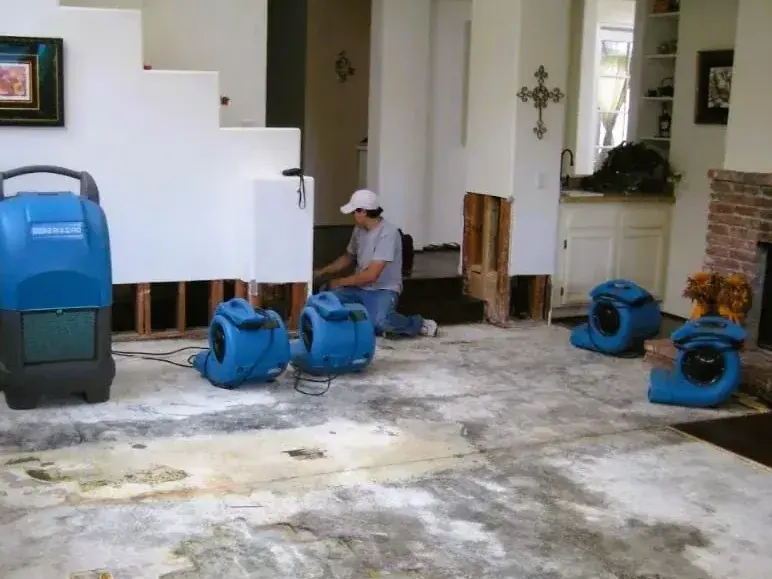
Dry to the touch is not dry. The drying team dries framing, subfloor, plaster and hardwood to a measured goal, with air movers and LGR dehumidifiers sized to each room and readings logged every day.
(888) 532-8620Need it dried right? Call now- IICRC S500 goal
- LGR and desiccant
- Daily psychrometric logs
What to do while you wait for drying equipment
- Stop the water source and remove standing water or have it extracted.
- Pull wet rugs, cushions and boxes out of the room so air can reach the floor.
- Keep interior doors to wet rooms closed and the heat at a normal setting.
- Do not paint, seal or re-lay flooring over anything that is still damp.
- Photograph the wet areas and call for a moisture map.
How structural drying is handled right
Sized to the room
Air movers are set to the room's evaporation load and LGR dehumidifiers to its size and class of loss, not by a rule of thumb.
Class sets the gear
Class 1 through 4 describes how much water the materials absorbed. Class 4, like hardwood and plaster, may need desiccants and drying mats.
Logs, not guesses
Temperature, humidity and grains per pound are recorded daily with material readings, so the file shows the structure is actually dry.
What does structural drying cost in Englewood, CO?
In Englewood, CO, structural drying typically runs $1,200 to $7,500. Equipment is usually billed per unit per day, so the price follows the number of rooms, the class of loss and how many days the materials take to reach the goal.
For a closer planning number, run the water damage cost calculator. The restoration contractor who responds sets the real scope after the walkthrough and the moisture map.
How structural drying is handled in Englewood
- 01
Map the moisture
The tech who does the walkthrough maps wet materials and takes dry reference readings.
- 02
Set the equipment
Air movers, LGR dehumidifiers and, where needed, desiccants and drying mats go in.
- 03
Read every day
The drying team logs material readings and psychrometric conditions daily and adjusts the setup.
- 04
Verify dry
Equipment comes out when readings land within 2 to 4 points of the dry reference.
Why Englewood homes need structural drying, not fans
Englewood's older houses are built from materials that hold water: oak strip floors, plaster on wood lath, old-growth framing and block basement walls. A box fan dries the surface and leaves the water inside. Structural drying moves water out of the materials themselves, measured, until they match a dry reference.
The Front Range's dry air helps, but only in the rooms above grade. Basements stay cool and damp, and winter losses happen in the coldest parts of the house. That is why the drying team sizes dehumidification to the space instead of relying on outside air.
The equipment and what each piece does
- Air movers push air across wet surfaces to speed evaporation.
- LGR dehumidifiers (low grain refrigerant) pull that moisture out of the air, even at lower humidity.
- Desiccant dehumidifiers handle Class 4 materials and cold spaces where refrigerant units slow down.
- Drying mats and cavity systems push or pull air through hardwood and wall cavities.
- Thermal imaging and pinless meters find water behind walls and under floors.
Hardwood and plaster
Oak floors cup when they take on water. Drying mats pull moisture up through the boards, and most cupping settles as the wood returns to its normal moisture content. Plaster on lath is dense and slow to dry, but it can often stay if it is still keyed to the lath. Both are Class 4 materials, and both take longer than drywall and carpet.
The EPA moisture and mold page explains why wet materials must be dry within 24 to 48 hours, and Colorado State University Extension covers indoor humidity in Colorado homes. See water extraction for the step that comes before drying.
Other water damage services in Englewood
Water damage help across Englewood, CO
The Englewood restoration crew covers every Englewood neighborhood from Downtown and South Broadway to Arapahoe Acres and Kent Place, plus Sheridan, Cherry Hills Village, Greenwood Village and Centennial next door.
ZIP codes 80110, 80111, 80112, 80113, 80150, 80151 and 80155.
See every Englewood area coveredStructural drying questions
What is the IICRC S500 standard?
IICRC S500 is the industry standard for professional water damage restoration. It covers how water is categorized, how losses are classed, how drying equipment is sized and when a structure counts as dry.
How long does structural drying take?
A contained Class 1 loss usually dries in three to five days. Hardwood, plaster and basement block walls take longer. The equipment stays until readings reach the goal.
Why is the equipment so loud?
Air movers move a lot of air across wet surfaces, and that is what makes drying fast. The noise is part of the process for the few days it runs.
Can I turn the equipment off at night?
It is best to leave it running. Turning it off lets humidity climb back and adds days to the job.
What is an LGR dehumidifier?
LGR stands for low grain refrigerant. It is a dehumidifier built to keep pulling water out of the air even as the room gets drier, which a household unit cannot do.
Does insurance pay for drying equipment?
Drying is usually part of a covered water claim, and daily logs are what show the adjuster the equipment was needed. Coverage depends on your policy, so it is worth checking with your own insurer.
Need it dried to standard in Englewood? Call now.
Moisture mapping, sized equipment and daily logs until the readings say dry.
(888) 532-8620Book the Englewood drying teamWater Damage Englewood CO
Englewood, CO and nearby Arapahoe County
(888) 532-8620 · open 24/7
Water and sewage losses only
Find us on Google