Water Extraction in Englewood, CO
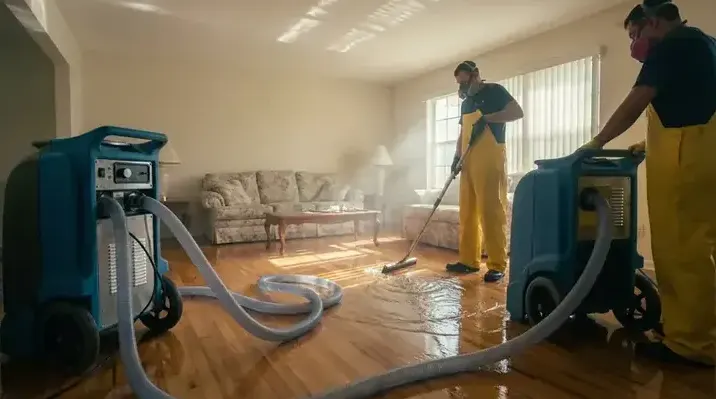
Standing water keeps moving into baseboards, pad and plaster for as long as it sits. The extraction crew pulls it out with truck-mounted units, maps what is still wet and sets drying equipment on the same visit.
(888) 532-8620Water standing? Start extraction- Truck-mounted extraction
- Moisture mapping
- 24/7 dispatch
What to do while water is still standing
- Stop the source: close the main valve, usually in the basement near the front wall in older Englewood homes.
- Switch off breakers for wet rooms if the panel sits in a dry spot and you can reach it safely.
- Stay out of standing water near outlets, extension cords and floor furnaces.
- Photograph every wet room before moving furniture or throwing anything out.
- Lift rugs, boxes and anything on the floor onto something dry, then call for extraction.
How water extraction is handled right in Englewood
Truck-mounted power
Truck-mounted units pull far harder than a shop vacuum and send the water out of the house instead of into a tank that fills in minutes.
Weighted extraction for pad
On carpet, a weighted tool or a ride-on extractor presses water out of the pad, which a surface wand leaves behind.
Mapping before drying
The tech who does the walkthrough marks every wet wall and floor with pinless meters and a thermal camera, so drying matches the real footprint.
What does water extraction cost in Englewood, CO?
In Englewood, CO, water extraction typically runs $400 to $2,500 on its own, and most jobs roll into a drying package of $1,500 to $5,000. The price follows the square footage, the water category, the flooring and how long the water sat.
For a closer planning number, run the water damage cost calculator. The restoration contractor who responds sets the real scope after the walkthrough and the moisture map.
How water extraction is handled in Englewood
- 01
Confirm the source is off
The response team checks that the main or the failed fixture is shut so no new water arrives.
- 02
Pull the bulk water
The extraction crew runs truck-mounted wands and submersible pumps where water is deep.
- 03
Map what is still wet
Meters and a thermal camera find water under flooring and inside the bottom of the walls.
- 04
Set the drying plan
Air movers and LGR dehumidifiers go in, sized to each room, with readings logged daily.
Why fast extraction matters in older Englewood homes
Most of Englewood was built between the 1920s and the 1960s. Those houses carry plaster walls, oak strip floors and partial basements with carpet laid straight on the slab. Every one of those materials drinks water. The longer standing water sits, the further it wicks up plaster and under the oak, and the more the job turns from drying into tearing out.
Clean supply-line water also changes category with time. After a couple of days on carpet and in wall cavities, the IICRC S500 standard treats it as Category 2, and more material has to come out. Fast extraction keeps the loss small and the category low.
What gets extracted, and how
- Carpet and pad: weighted extraction presses water out of the pad; soaked pad from dirty water is removed.
- Hardwood: surface water is pulled first, then drying mats draw moisture up through the boards.
- Basement slabs: submersible pumps handle depth, then wands clear the film left behind.
- Crawlspaces: pumps and wet vacuums clear the vapor barrier before air movers go in.
After the bulk water is gone, the drying team takes over. See structural drying for how the drying goal is measured, and basement flooding cleanup when the water is below grade.
When the water is not clean
If the water came up through a floor drain or in from outside, it is Category 3 from the start. The extraction crew works in protective gear, and porous materials it touched come out rather than being dried. That work is covered under sewer backup cleanup.
For safety around standing water and power, the Ready.gov flood page is a solid checklist, and EPA WaterSense covers how to catch slow leaks before they become standing water.
Other water damage services in Englewood
Water damage help across Englewood, CO
The Englewood restoration crew covers every Englewood neighborhood from Downtown and South Broadway to Arapahoe Acres and Kent Place, plus Sheridan, Cherry Hills Village, Greenwood Village and Centennial next door.
ZIP codes 80110, 80111, 80112, 80113, 80150, 80151 and 80155.
See every Englewood area coveredWater extraction questions
Can a shop vacuum handle the water instead?
For a cup of water, yes. For standing water across a room, a shop vacuum fills in minutes and cannot pull water out of carpet pad. Truck-mounted extraction removes far more, far faster, and the meters show what is still wet afterward.
Will the carpet have to be thrown out?
Clean-water carpet can often be extracted and dried in place. The pad is replaced more often, because it holds water. Carpet touched by sewage or floodwater is removed.
How long does extraction take?
Extraction itself usually takes a few hours for a room or a basement. Drying afterward usually runs three to five days for a contained loss, longer for hardwood and plaster.
Is it safe to walk on wet carpet?
It is safe if the power to that area is off and the water is clean. Stay off it if the water came from a drain or from outside, and keep away from any outlet or cord in the water.
Does insurance pay for water extraction?
Extraction after a sudden and accidental leak is commonly part of a covered water claim. Coverage depends on your policy, so it is worth checking with your own insurer.
What happens after the water is gone?
The drying team sets air movers and LGR dehumidifiers, and readings are taken daily until wet materials reach the drying goal.
Standing water in Englewood? Get it out now.
Truck-mounted extraction, a moisture map and drying equipment set on the first visit, day or night.
(888) 532-8620Call for Englewood water removalWater Damage Englewood CO
Englewood, CO and nearby Arapahoe County
(888) 532-8620 · open 24/7
Water and sewage losses only
Find us on Google